Is the Maldives worth it? A week on a resort island is one of the more expensive beach holidays you can book from the UK, so the question deserves a straight answer. It depends on what you want from the trip. This guide sets out what the Maldives does that other beach destinations cannot, the catches that disappoint travellers who booked the wrong way, and a verdict by traveller type.
Quick answer
Yes, the Maldives is worth it for travellers who want reef, clear water and seclusion, and no for anyone who wants culture, variety or nightlife. The one qualifier is board basis. Food, drinks and excursions bought at a resort carry a service charge of at least 10% plus 17% tourism GST, so a half-board week can cost far more than the room rate suggests.
What does the Maldives do better than anywhere else?
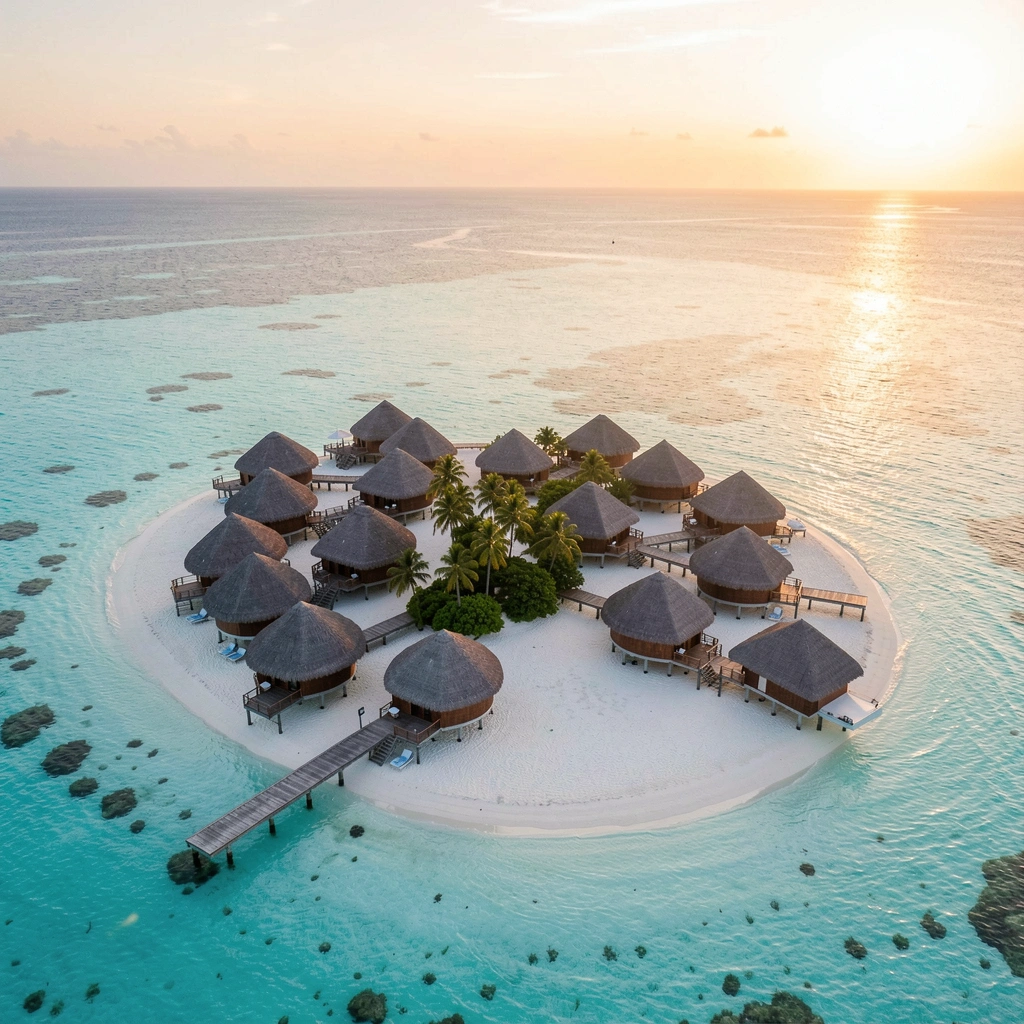
The country is 1,192 coral islands spread across 26 atolls in the Indian Ocean. Most resorts occupy an island of their own, and 179 resorts were operating in 2026. That layout produces three things few other destinations can match.
- One island, one resort. There are no neighbouring hotels, no beach vendors and no public road. The holidaymakers you see at breakfast are the only other holidaymakers on the island.
- A reef from your villa steps. Many resorts sit on a house reef, so snorkelling means walking into the lagoon rather than joining a boat trip.
- Overwater villas are commonplace. Elsewhere a villa over the lagoon is a novelty with a surcharge. At many Maldives resorts it is a normal room category.
Our Maldives holidays guide covers costs, atolls and seasons.
Maldives pros and cons at a glance
| Pro | Con |
|---|---|
| Complete seclusion on a private island. | Isolation, with nowhere to go beyond the resort. |
| Snorkelling straight from the beach. | Reef condition varies by atoll after 2024 bleaching. |
| Resort service on hand all day. | Taxes and service charge on every extra. |
| Average air temperature of 25–32°C. | Southwest monsoon, mid-May to November. |
| Everything handled on one island. | No independent restaurants or bars. |
| Seasonal direct flights from Heathrow of about 10.5 hours. | Most routings add a Gulf stop plus a boat, seaplane or domestic flight. |
Is the Maldives overrated? The honest catches
The Maldives is not overrated for what it does well. It disappoints people who expected something it was never built to offer. These are the catches to weigh before paying the deposit.
How the bill builds up
Neither charge is optional. The service charge is set in law and also covers rooms and spa treatments. Resort stays carry a Green Tax of US$12 per person per night on top.
Check what a package’s board basis actually includes. Some all-inclusive plans may cover only house wine and a set menu, with premium drinks, speciality restaurants and excursions charged separately. Before booking, ask for the resort’s food and drink price list, and check whether a quoted room rate already includes the service charge, TGST and Green Tax.
Isolation
There is no town to walk to. Leaving the island means a paid boat trip. If you like variety at dinner, check how many restaurants a resort has before you book, because a small island may have only two. One fix is to split the holiday, with city nights first and the island second. A Dubai and Maldives twin-centre holiday is one way to do that.
The reef isn’t what it was everywhere
The 2024 global bleaching event hit the Maldives hard. A peer-reviewed study published in Coral Reefs in 2026 found live hard coral in the central atolls fell by more than 40% on average. Surveys of Huvadhoo Atoll in the far south found no measurable mortality. Reefs recover at different speeds, so the sensible step is to ask how a resort’s house reef fared before you book.
Useful questions are whether the resort runs a coral restoration project, what its marine biologist reports seeing on the house reef, and how far the nearest good dive sites are by boat. Recent guest photos taken underwater are more telling than brochure images. Snorkel with a guide or inside the lagoon until you know the reef, because the Foreign Office warns of strong tidal currents around the islands. On whale-shark excursions, stay well clear of boats, as the same advice reports fatal propeller accidents at those sites.
Local rules
- Alcohol is served only on resort islands and may not be taken off them. It cannot be brought into the country either.
- Dress on local islands means covered shoulders and no short or tight shorts. Topless sunbathing is prohibited everywhere, resorts included.
- Tobacco is banned for anyone born on or after 1 January 2007, and the ban applies to visitors.
- Vapes and e-cigarettes are banned at every age.
Medical care is far away
The UK Foreign Office says the only fully equipped hospitals are in Malé and Hulhumalé. Serious treatment can mean hours of travel by boat or seaplane, which matters most for divers, older travellers and anyone who is pregnant. The same advice lists dengue and measles as the main health risks. Take out travel insurance that covers medical evacuation, and declare every existing condition. Divers should also check that the policy covers the depths they plan to dive and treatment in a decompression chamber.
Weather in the southwest monsoon
Rain in the southwest monsoon usually falls as showers with sunny spells between them, according to the Maldives Meteorological Service. Month-by-month timing is in our Maldives holidays guide, linked above.
Is the Maldives worth the money?
The cheaper way to see the Maldives is a guesthouse on an inhabited local island. In 2026 there were 952 of them. Guesthouses with 50 rooms or fewer charge a lower Green Tax of US$6 per person per night. The trade-off is that the local-island rules above apply to your whole stay. SuperDestinations sells resort holidays, not guesthouse stays, so our advice centres on choosing the right resort and board basis.
Within the resort market, the price gap between islands is wide, and the most expensive option is not always the best fit. A larger island suits a longer stay. A small, quiet island suits a short honeymoon. A resort with a strong house reef suits snorkellers better than one with a bigger spa.
The premium is easiest to justify when you will use what it pays for. If you would snorkel every day, value complete privacy and want staff to handle every detail, few places deliver all three together. If the plan is mostly a sunlounger, a pool and a book, a beach resort with a shorter flight gives a similar week. The same logic applies when choosing between resorts. Spend first on what you will notice every day, such as the house reef and the board basis, then on a bigger villa or a better-known name.
Two alternatives are worth pricing before you commit. Luxury Bali holidays cost less per night and add temples, rice terraces and restaurants outside the hotel. The Maldives vs Seychelles comparison suits travellers who want granite scenery, hiking and island-hopping as well as beaches.
Is the Maldives worth it for you? Who it suits, and who should go elsewhere
The Maldives suits:
- couples and honeymooners who want privacy above all else. It features among our honeymoon destinations from the UK.
- snorkellers and divers, who get the most out of every day on the island.
- people who want to switch off completely, with no plans beyond the next meal and the next swim.
Go elsewhere if you are:
- looking for culture, history or local food beyond the resort kitchen.
- restless after two days in one place.
- keen on nightlife, shopping or evenings out.